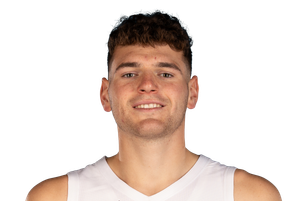
Donovan Clingan
 #23
DonovanClingan#23
Recent Game
Wed, Oct 21, 2026Gamelog
| Opp | Result | FGM | FG% | 3PM | 3P% | FTM | FT% | PTS | REB | AST | STL | BLK | TO | PF | |
|---|---|---|---|---|---|---|---|---|---|---|---|---|---|---|---|
| Wed, 10/21 | vs  PHX | W124-83 | 4/9 | 44.4 | 2/4 | 50.0 | 1/2 | 50.0 | 11 | 7 | 2 | - | - | 1 | 2 |
Career Stats
| Year | Team | FGM | FG% | 3PM | 3P% | FTM | FT% | PTS | REB | AST | STL | BLK | TO | PF |
|---|---|---|---|---|---|---|---|---|---|---|---|---|---|---|
| 2026 | POR | 4/9 | 44.4 | 2/4 | 50.0 | 1/2 | 50.0 | 11.0 | 7.0 | 2.0 | 0.0 | 0.0 | 1.0 | 2.0 |
| 2025 | POR | 356/684 | 52.0 | 84/246 | 34.1 | 138/203 | 68.0 | 12.1 | 11.6 | 2.1 | 0.6 | 1.7 | 1.2 | 2.4 |
| 2024 | POR | 180/334 | 53.9 | 14/49 | 28.6 | 62/104 | 59.6 | 6.5 | 7.9 | 1.1 | 0.5 | 1.6 | 1.1 | 2.8 |
2026 Fantasy Outlook
Clingan seized Portland's starting center job after Deandre Ayton's departure and never gave it back, starting all 77 of his appearances in 2025-26 while averaging 12.1 points, 11.6 rebounds, 2.1 assists and 1.7 blocks per game. The 7-foot-2 sophomore delivered exactly what his late-rookie-season surge promised, providing near-elite rim protection with a double-double most nights. However, he added a wrinkle. After his three-ball looked like a liability during his first season, Clingan knocked down 34.1 percent of his attempts on 3.2 attempts per game in Year 2. He kept his field-goal percentage at a respectable 52.0 despite more perimeter shots, elevating his offensive ceiling past the traditional-big label. He shot just 68.0 percent from the line, which stings in category leagues even at modest volume, and his 0.6 steals per game left his defensive value concentrated on blocks. It's also fair to note the monitored workload. Clingan played 27.2 minutes per game, which is light for a full-time starter, and whether that was due to foul trouble, matchup-based benchings or simply management, there's clearly more upside if Portland pushes him into the low 30s. The depth chart shouldn't stand in the way. Robert Williams, who signed a three-year deal to return to Portland, has never submitted a full season, and second-year center Yang Hansen remains a developmental piece. Clingan enters Year 3 as a top-tier source of rebounds and blocks with a floor-spacing element most rim protectors can't offer. He's a strong mid-round target in category formats, particularly for punt-free-throw builds. Points-league managers can bump him down a tier, where the modest scoring and steals limit his ceiling. However, if his minutes climb, Clingan has top-50 upside in any format.