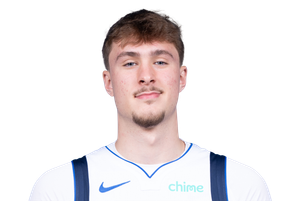
Cooper Flagg
 #32
CooperFlagg#32
Recent Game
Wed, Oct 21, 2026Gamelog
| Opp | Result | FGM | FG% | 3PM | 3P% | FTM | FT% | PTS | REB | AST | STL | BLK | TO | PF | |
|---|---|---|---|---|---|---|---|---|---|---|---|---|---|---|---|
| Wed, 10/21 | @  HOU | L110-128 | 10/17 | 58.8 | 1/4 | 25.0 | 11/13 | 84.6 | 32 | 5 | 2 | 3 | 1 | 4 | 4 |
Career Stats
| Year | Team | FGM | FG% | 3PM | 3P% | FTM | FT% | PTS | REB | AST | STL | BLK | TO | PF |
|---|---|---|---|---|---|---|---|---|---|---|---|---|---|---|
| 2026 | DAL | 10/17 | 58.8 | 1/4 | 25.0 | 11/13 | 84.6 | 32.0 | 5.0 | 2.0 | 3.0 | 1.0 | 4.0 | 4.0 |
| 2025 | DAL | 559/1194 | 46.8 | 72/244 | 29.5 | 283/342 | 82.7 | 21.0 | 6.7 | 4.5 | 1.2 | 0.9 | 2.3 | 2.0 |
2026 Fantasy Outlook
Flagg's rookie season lived up to every bit of the hype that surrounded his No. 1 overall selection. Across 70 games, he averaged 21.0 points, 6.7 rebounds, 4.5 assists, 1.2 steals and 0.9 blocks in 33.5 minutes, earning unanimous First Team All-Rookie honors and the Rookie of the Year award. He put together a legendary stretch run, including a 51-point outburst against Orlando (the youngest player ever to reach 50) and a near 45-point triple-double against the Lakers days later. Durability was a strength beyond the ankle issues. He battled a foot sprain that cost him eight games in February and March, plus a stretch of ankle trouble in January, but otherwise handled a massive workload for a teenager. The clearest weakness was efficiency from deep - 29.5 percent on threes. Heading into 2026-27, the biggest swing factor is Kyrie Irving's return from his knee injury. With Irving back in the backcourt, Flagg should see relief from the ball-handling and shot-creation burden he carried as a rookie, which could mean a dip in usage and counting stats but likely better efficiency, since he'll benefit from more open catch-and-shoot looks rather than manufacturing everything himself. The coaching change (Jason Kidd's departure) adds some uncertainty to how minutes and role are distributed, and rookie big man Morez Johnson's arrival could stir up frontcourt rotations, though that's more likely to affect the bigs than Flagg directly. Given his two-way skill set, motor, and the organization's clear intent to build around him, Flagg remains a top fantasy asset regardless of touches. He should still profile as a high-floor, multi-category contributor with MVP-caliber upside if his jumper progresses as expected.